


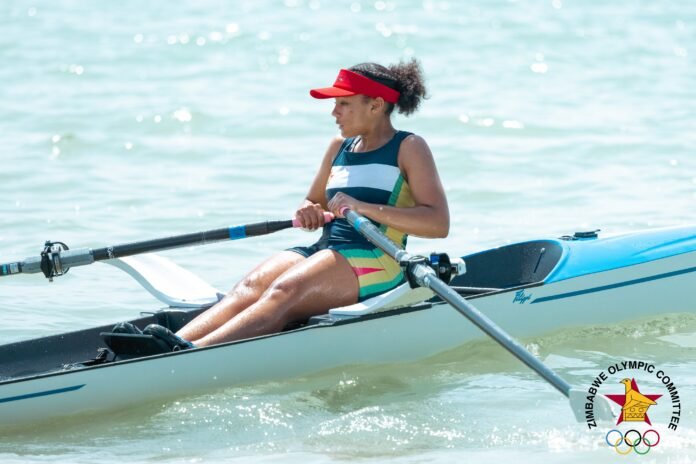
By Lena Smirnova/Olympics.com
Arianna Robinson is a fast learner.
Two days before her first competition in rowing coastal beach sprints at Dakar 2026, the Zimbabwean rower had never experienced rowing on waves.
At least, not real waves.
Her training for the Youth Olympic Games consisted of balancing on a Bosu ball to imitate the roll of the sea.
“One of my friends, he would shake the ball so it would be like I’m on the waves,” Robinson told Olympics.com. “We don’t have a sea in Zimbabwe and all our dams are fairly small so there’s not a lot of waves so I wasn’t able to practise there. But we made a plan and we did land simulations.”
In addition to exercising on gym equipment meant to replace a coastal rowing shell, Robinson ran up hills and did circles on the track to imitate sprinting on the hot sand of Saly beach.
But nothing in training could have imitated the pure joy the 17-year-old felt when she rowed on real waves for the first time arriving in Senegal.
“I’ve never done beach sprints before, so this is all so new. But I really enjoyed it,” she gushed on shore. “The fact that I’m here and able to do this, I’m so happy.”
Robinson was the sole competitor from Zimbabwe in rowing at Dakar 2026 where beach sprints are making their Youth Olympic debut. While she did not advance to the knockout stage in the women’s solo, the experience inspired her to continue pursuing this discipline.
Olympics.com spoke to the Arianna Robinson about her swift initiation into beach sprints, learning on the spot and sharing the pride of Dakar 2026 with all of Africa.
From flatwater rowing to sprints
Robinson was 28th out of 32 athletes in the first time trial at Dakar 2026, finishing her race in a time of 3:31.27 minutes, 33.45 behind leader Tanya Brendle.
A day later on 1 November, she cut that time to 3:03.96 in the second time trial, a mere 6.08 behind the leader Allison Grove.
“It went way better,” a beaming Robinson said after the race. “I pushed much more today than I did yesterday because I fixed what was wrong yesterday.”
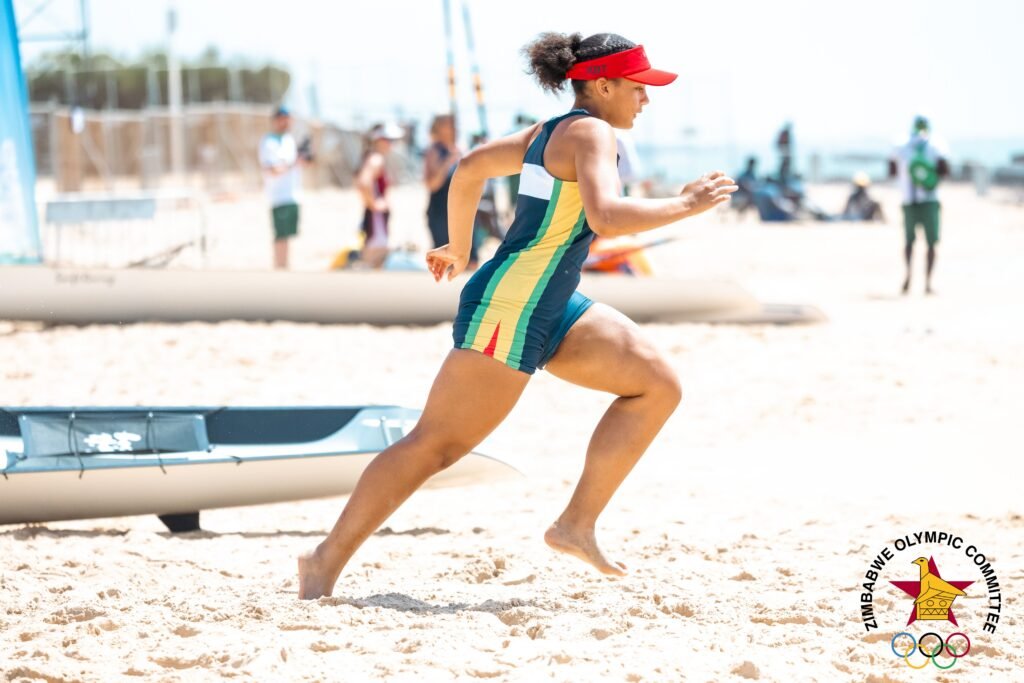
While some athletes said they struggled to sleep the night before because of nerves, Robinson was anxious to get back in the water.
A friend from Zimbabwe who has done coastal rowing watched the video of her first race and gave her some pointers on what to fix going forward, namely making her turns quicker.
“I was actually a bit more excited because I got to fix what was wrong yesterday,” Robinson said. “I was just so much more ready to go and fix those problems and do better.
“We have this saying, ‘leg drive’,” she continued, referencing the technique of digging in heels during a game of tug of war. “So I was just repeating it in my head and all the training that I’ve done to really push myself.”
Now that Robinson has experienced the adrenaline and fan atmosphere of beach sprints at a Youth Olympic level, she says she does not want to go back to only doing flatwater rowing.
But she also remains acutely aware of the challenges that await her when she returns home. Without access to the sea in Zimbabwe, her closest training option with real waves is Mozambique and that is still a fair distance away.
If Robinson does manage to find a training spot by the sea, the next challenge is to find fellow beach sprinters to compete with. This is where she hopes Dakar 2026 can help grow the sport across the African continent.
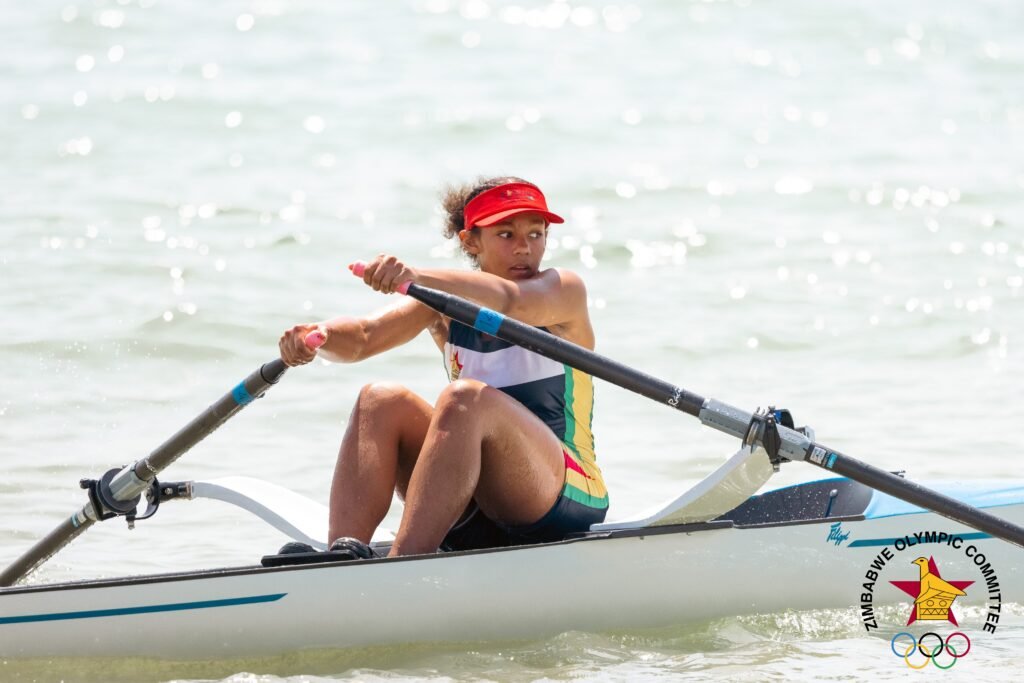
“Hopefully we can get more beach sprints in Zim or find local competitions where we can do them. Or even go to our neighbouring countries to participate in them because I love this so much more than classic rowing,” she said. “If I can get better in beach sprints, that would be so amazing.”
While Robinson’s family could not travel to Senegal, there has been no shortage of support for the teen rower from the day she got named to the Youth Olympic Games team. Her friends and school repost any content that the Zimbabwe Olympic Committee shares about her and her phone is always full of encouraging messages.
“My friends have been so supportive during my journey here. Even before this, they were like, ‘Arianna, you’re going to the Olympics?’ And I was like, ‘Yeah, I am!’,” Robinson said. “I’m super proud to be chosen as the only rower from Zim, also the only female (rower) as well. And the fact that I’m part of the Youth Olympics and it’s the first one in Africa also means a lot to me.”
For Robinson, Dakar 2026 hosting the first-ever Olympic event in Africa feels not only as an accomplishment for Senegal but for the continent at large.
She basked in that feeling while at the Opening Ceremony on 31 October, marvelling at the artistic performances and glowing with a particular pride when IOC President Kirsty Coventry – a fellow Zimbabwean – took the stage.
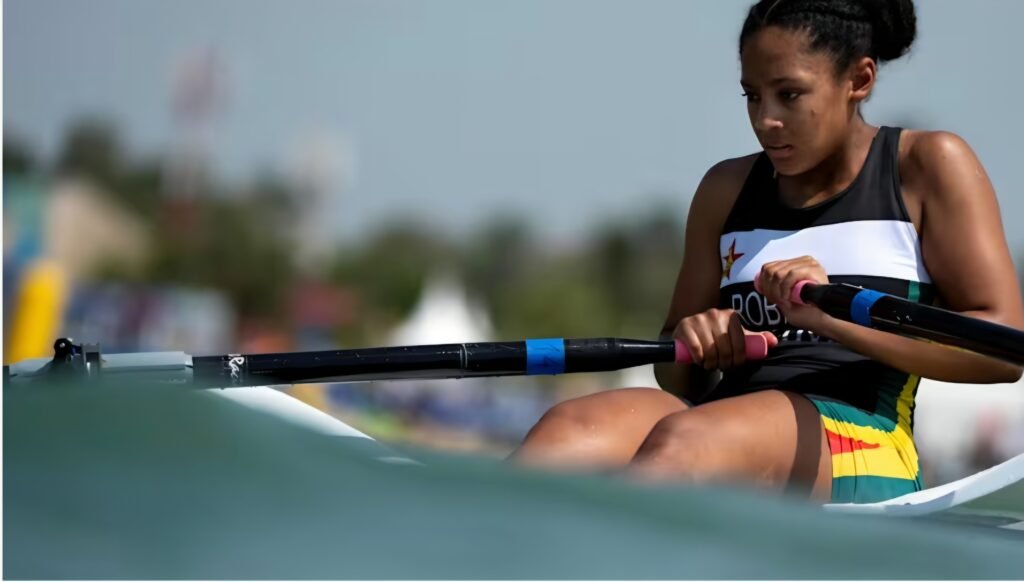
“I was happy to see Kirsty Coventry there, since she’s from Zim, and seeing how far she’s actually gone, which gives me motivation a little bit to see how far I can go,” Robinson said. “Maybe one day I could get to an international level and everyone will know me.”
Robinson has watched multiple Olympic Opening Ceremonies and competitions on TV from her living room as a child. Now to be in the stadium as a Youth Olympian – and on her home continent too – was a feeling that lived up to all her expectations of what the Olympic Movement is.
And she is excited for Africa to have a big role in making its future even more diverse.
“I hope (Dakar 2026) shows that (Africa) does have a lot to offer and that people, instead of travelling all the way to Europe or Asia, they can come to Africa because there’s so much more to show them,” Robinson said.
“It’s so good to embrace that the Youth Olympics are actually in Africa, to have a different atmosphere and diversity.”

